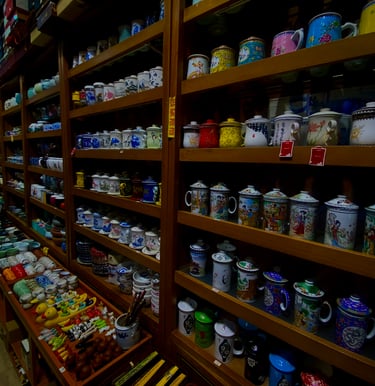
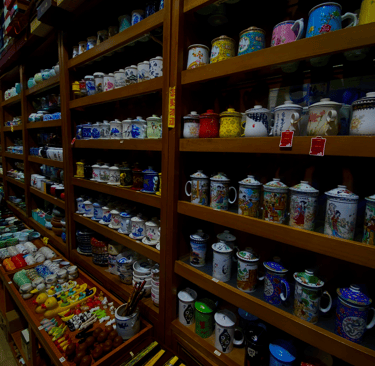
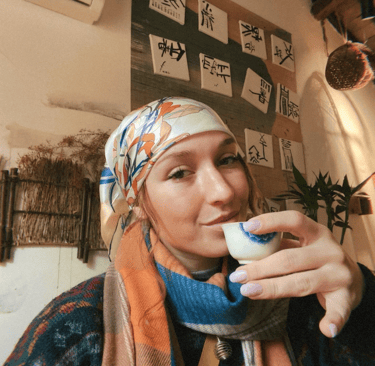
Here's the Tea about Tea in China
Join me on an adventure through China’s vibrant tea culture! From traditional tea houses to hidden local gems, I explore the history, rituals, and unique flavors of Chinese tea. Whether you're a tea lover or just curious, this blog serves up fun, professional, and informative travel experiences—one cup at a time.
TRAVELING IN CHINA
Baylee Mee
2/21/20254 min read
Here’s the Tea About Tea in China
Before visiting China, I thought I knew tea. I drank it everywhere, at any time of the day, and loved the mass-produced flavors back home in America. I considered myself a tea-loving, health-conscious girly, happily hydrating with my go-to brews. But stepping into a traditional Chinese tea house changed everything. Tea wasn’t just a drink; it was an experience, a ritual, and a deep-rooted part of Chinese culture. If you’re traveling to China, visiting a tea house isn’t just a recommendation—it’s a must. Here’s everything I learned from my time sipping, swirling, and savoring tea in China.
Experiencing a Traditional Tea House
One of the highlights of my trip was visiting Linquan Chayi, a government-run tea house in Dongcheng, Beijing. This tea house is dedicated to preserving the historical and cultural values of tea in China. From the moment I entered, I was transported into a world of elegance, tradition, and mindfulness.
Seated behind a beautiful bamboo screen, we were guided by a tea master who introduced us to the art of tea preparation. Every movement was deliberate and graceful, from rinsing the leaves to the precise way the tea was poured. I sampled seven types of tea, each with unique flavors and aromas:
Ginseng Oolong Tea
Jasmine Tea
Lychee Black Tea
Rose Tea
Pu-erh Black Tea
Fruit Tea
Milk Oolong Tea
The Traditional Tea-Pouring Process
Rinse the tea leaves: The first pour of hot water cleanses the leaves, and this water is discarded.
Steep the tea: The next pour is left to steep, with timing varying depending on the type of tea.
Pour and serve: The tea is distributed into small cups for tasting.
Proper way to hold a tea cup:
Women hold the rim with the thumb and index finger, supporting the base with the middle finger while keeping the ring and pinky fingers extended.
Men hold it similarly but curl the ring and pinky fingers into the palm.
Smell before you sip: This enhances the appreciation of the tea's aroma before tasting.
Tea Shops: A More Personal Experience
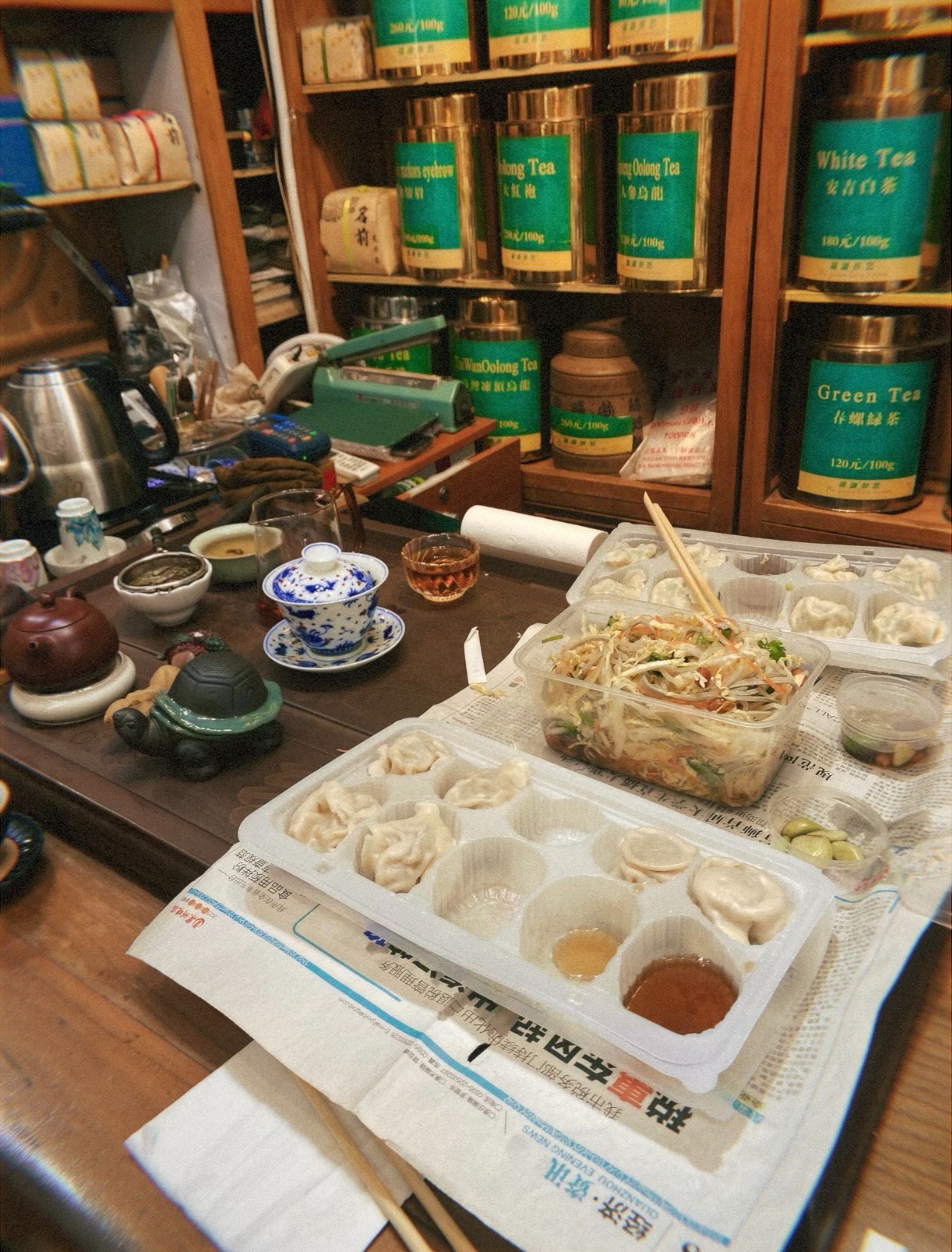
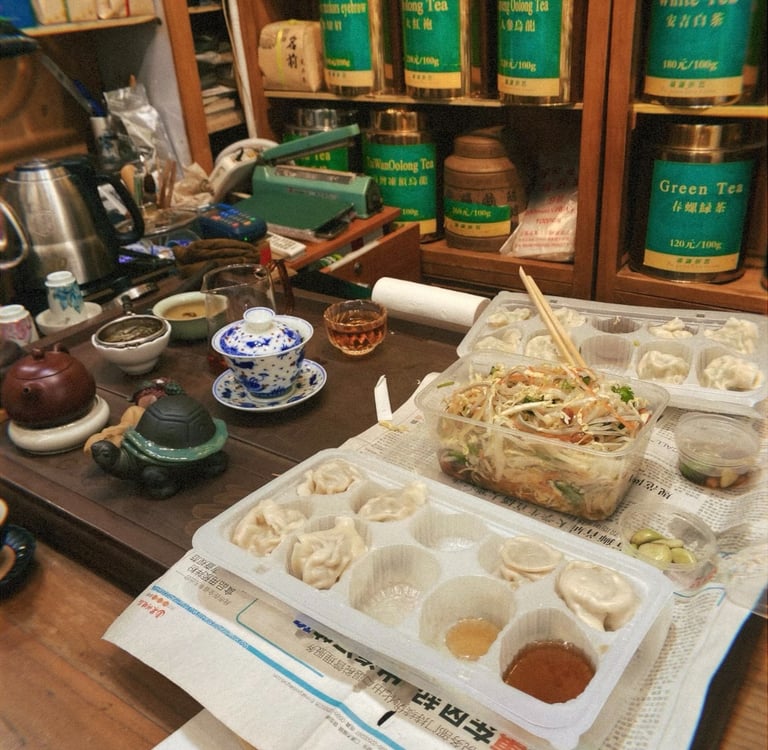
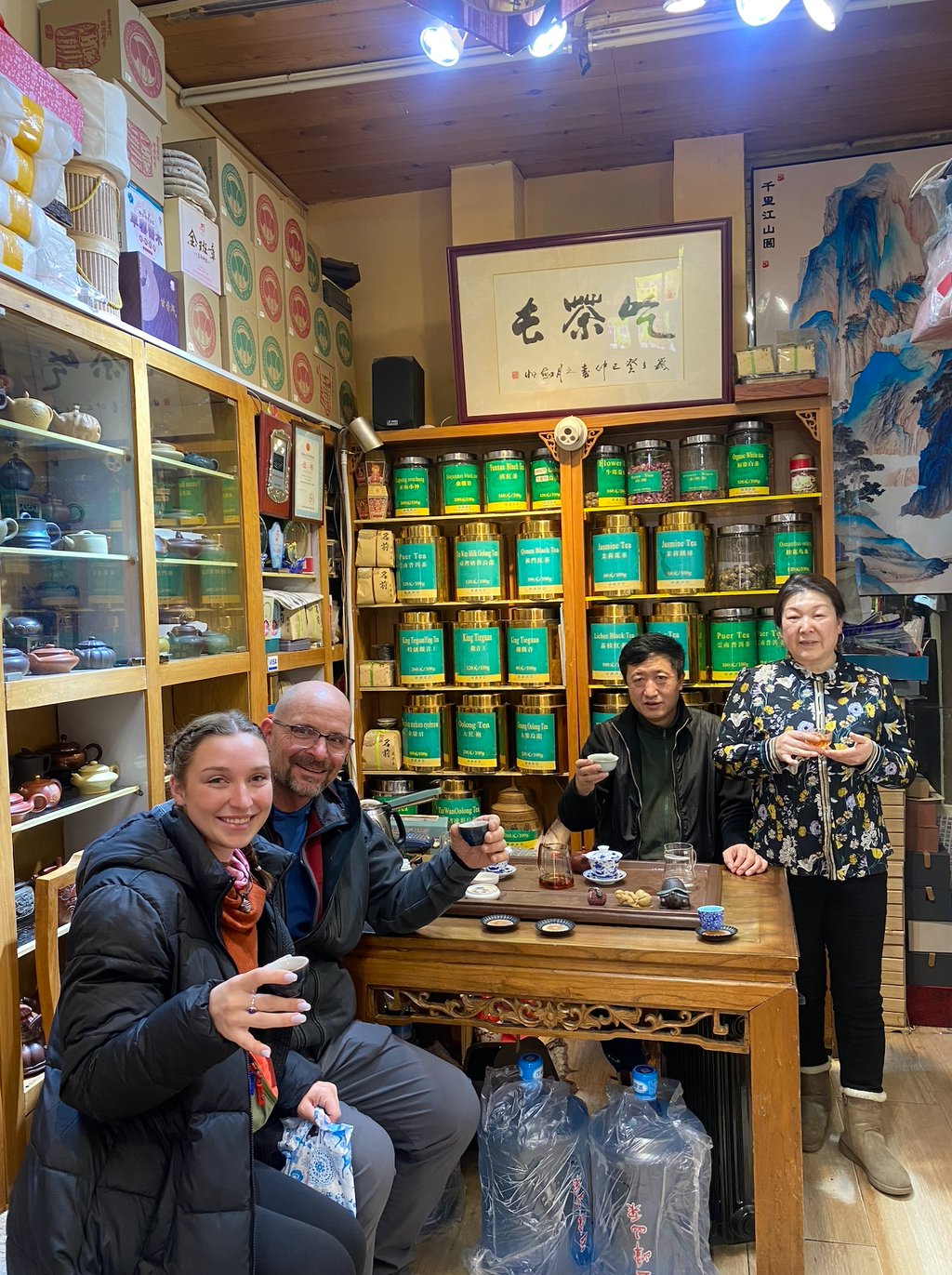
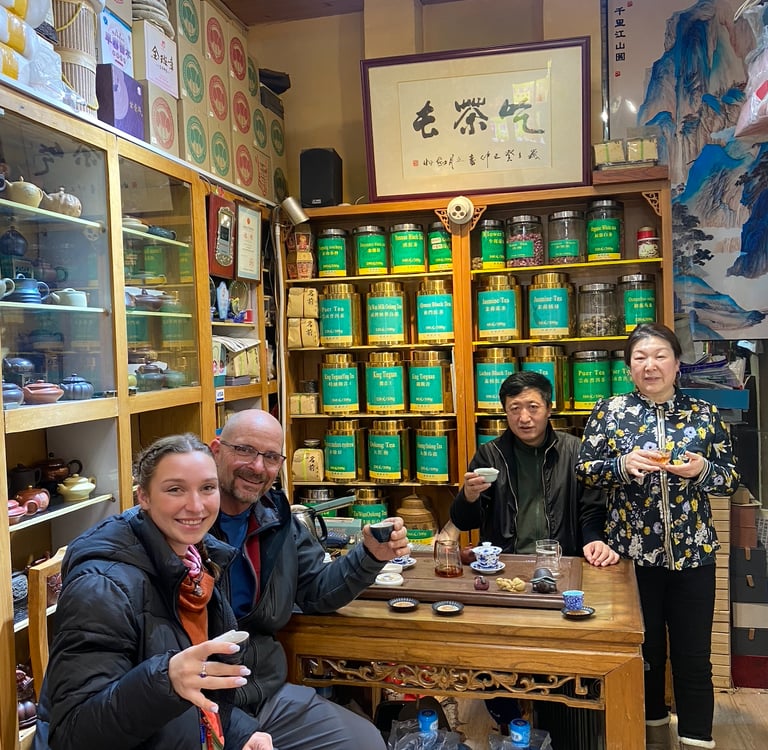
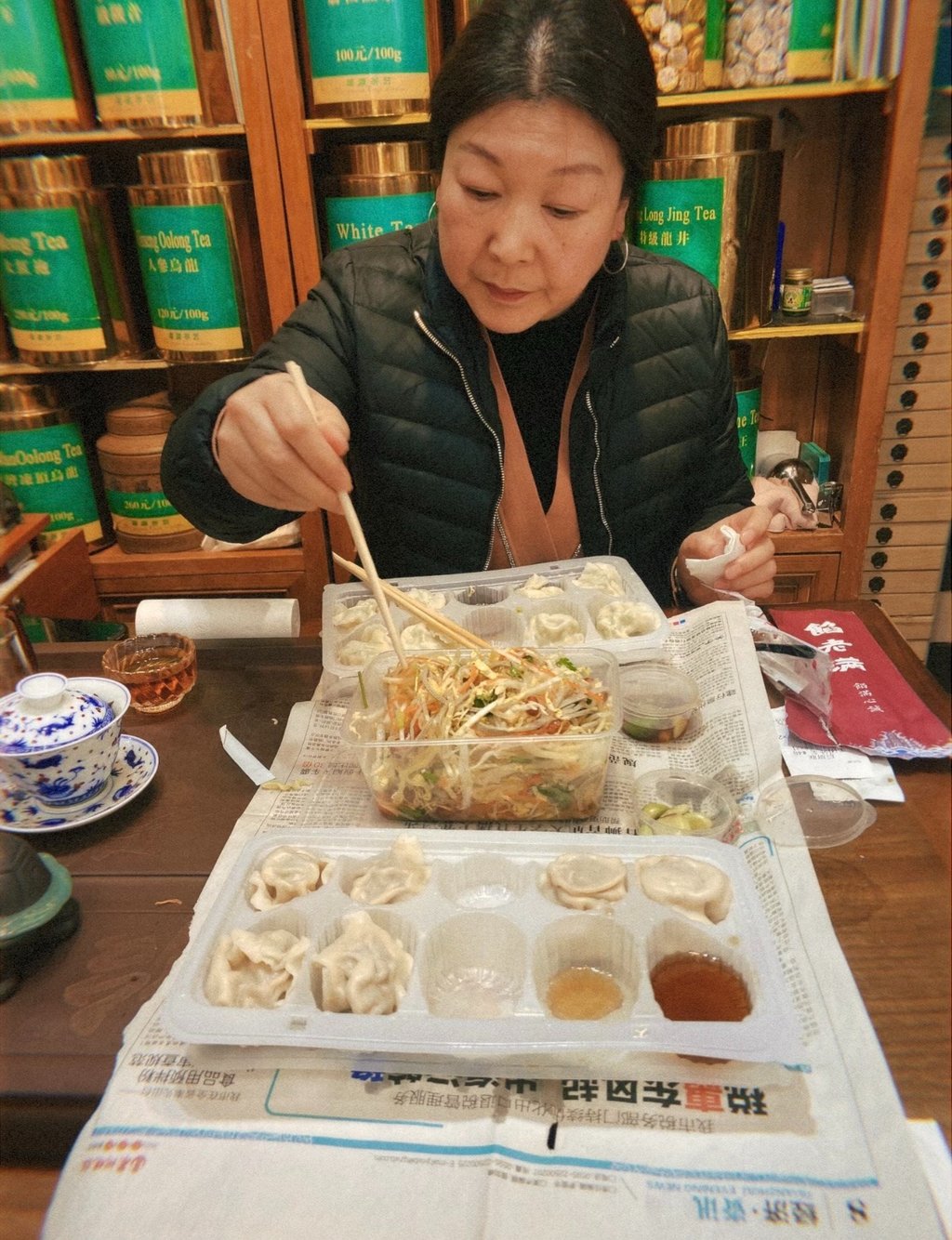
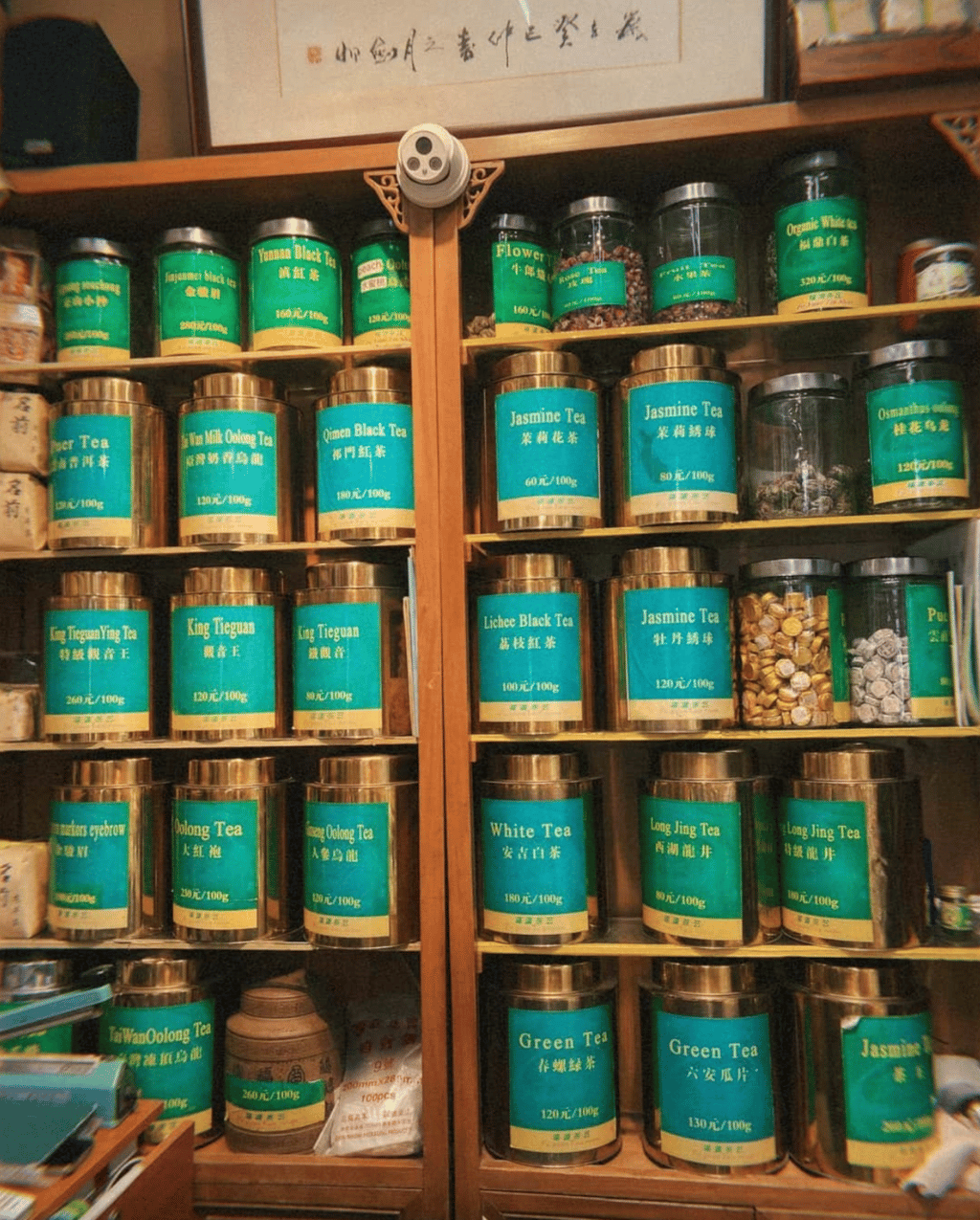
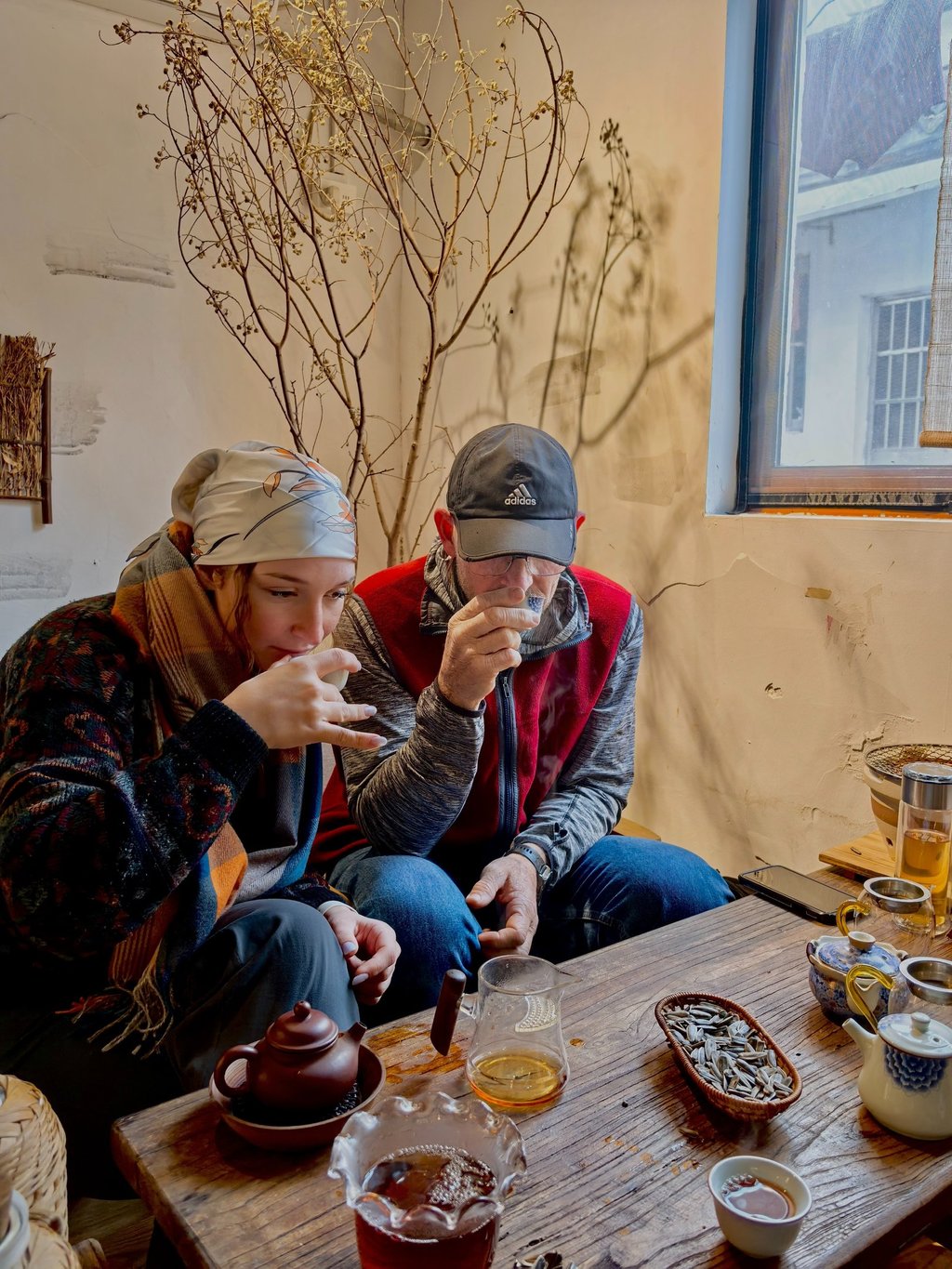
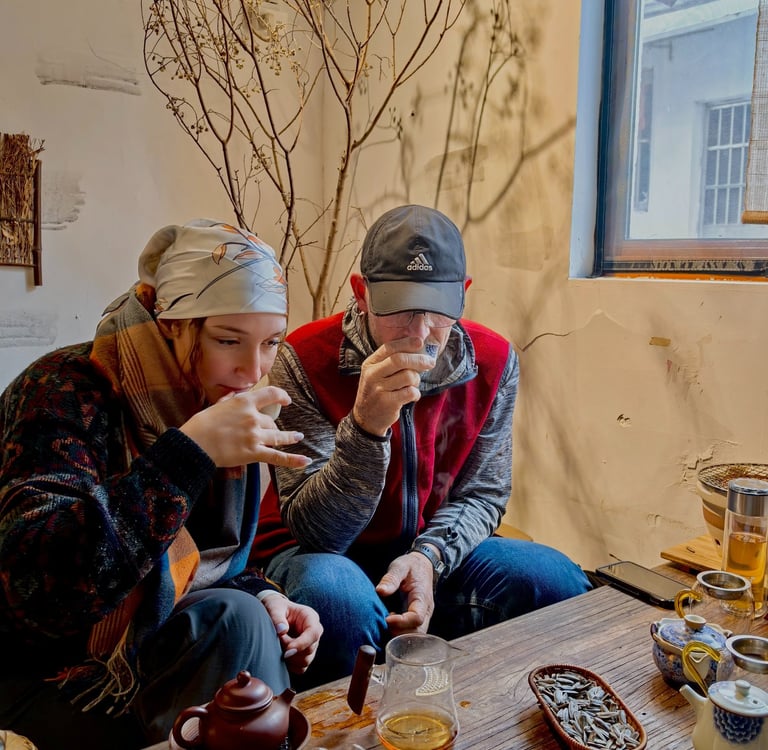
Later, I stumbled into Fyuan Tea Shop, a charming spot near Houhai Bar Street in Xicheng, Beijing. The owners, an older couple with a deep love for tea, welcomed me like family. I spent four hours chatting with them about tea culture, health benefits, and proper brewing techniques. Unlike the structured experience at the tea house, this felt more like an intimate tea gathering among friends.
In another tea house, Buzao Tea House in Suzhou, the vibe was completely different—relaxed and social. Here, we selected three teas to try, exploring more herbal and floral options such as Tangerine Peel Tea, Goji Berry Tea, and Red Tea.
The Six Main Types of Chinese Tea & Their Benefits
1. Green Tea (绿茶, lǜ chá)
Flavor: Fresh, grassy, floral
Steeping Time: 30 seconds - 1 minute
Benefits:
Rich in antioxidants
Boosts metabolism & fat burning
Enhances brain function
Supports heart health
Best Time to Drink: Morning, before or after exercise, early afternoon
2. White Tea (白茶, bái chá)
Flavor: Light, delicate, slightly sweet
Steeping Time: ~3 minutes
Benefits:
Anti-aging & skin health
Supports immunity
Low in caffeine, great for relaxation
Best Time to Drink: Morning, after meals, before bed
3. Yellow Tea (黄茶, huáng chá)
Flavor: Smooth, mellow, slightly sweet
Steeping Time: ~2 minutes
Benefits:
Easier on the stomach than green tea
Boosts metabolism & digestion
Best Time to Drink: Morning, after meals, early afternoon
4. Oolong Tea (乌龙茶, wū lóng chá)
Flavor: Complex, ranging from floral to roasted
Steeping Time: 1-5 minutes (depends on oxidation level)
Benefits:
Enhances focus & brain function
Supports digestion & weight management
Regulates blood sugar levels
Best Time to Drink: Morning, before/after meals, early afternoon
5. Black Tea (红茶, hóng chá)
Flavor: Rich, malty, caramel or chocolate notes
Steeping Time: 3-5 minutes
Benefits:
Higher caffeine content, great for energy
Supports heart health
Aids digestion
Best Time to Drink: Morning, midday, after a heavy meal
6. Pu-erh Tea (普洱茶, pǔ ēr chá)
Flavor: Earthy, rich, smooth
Steeping Time: 10-30 seconds
Benefits:
Fermented, rich in probiotics for gut health
Helps break down fats & supports digestion
Regulates cholesterol levels
Best Time to Drink: Morning, after meals, early afternoon
Fun Facts About Tea Culture in China
Yixing Clay Teapots (宜兴紫砂壶, Yíxìng zǐshā hú): These unglazed clay teapots absorb flavors over time. Because of this, they are dedicated to a single type of tea to prevent flavor mixing.
Tea Pets (茶宠, chá chǒng): Many tea lovers in China have small clay figurines that "drink" spilled tea, symbolizing good luck.
Slurping is encouraged: Unlike in Western tea etiquette, slurping in China is seen as a way to cool tea and enhance flavors.
Yellow tea is the rarest: This lightly oxidized tea is produced in small batches in Hunan, Sichuan, and Anhui, making it harder to find than other tea types.
Final Thoughts: Why Tea in China is a Must-Do
Before visiting China, I thought I knew tea. I had my grocery-store tea bags, my flavored green teas, and my go-to chamomile at night. But stepping into my first traditional Chinese tea house changed everything. The way tea was poured, smelled, and even held in my hands—it wasn’t just a drink; it was an experience. If you’re traveling to China, visiting a tea house isn’t just a recommendation, it’s a must.
Drinking tea in China isn’t just about the beverage—it’s about the experience. Whether you choose a formal tea house, a cozy family-run shop, or a social gathering spot, each setting offers something unique. Tea is deeply personal yet deeply communal, a drink meant to be savored in solitude or shared in tradition.
So, if you ever find yourself in China, don’t just sip the tea—immerse yourself in it.
What about you? Have you had an unforgettable tea experience? Share your favorite tea moments in our compass confession